Lars reviewed Brave New World by Aldous Huxley
None
5 stars
4.6
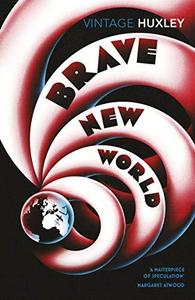
256 pages
English language
Published Jan. 19, 2004
Brave New World is a dystopian social science fiction novel by English author Aldous Huxley, written in 1931 and published in 1932. Largely set in a futuristic World State, whose citizens are environmentally engineered into an intelligence-based social hierarchy, the novel anticipates huge scientific advancements in reproductive technology, sleep-learning, psychological manipulation and classical conditioning that are combined to make a dystopian society which is challenged by only a single individual: the story's protagonist. Huxley followed this book with a reassessment in essay form, Brave New World Revisited (1958), and with his final novel, Island (1962), the utopian counterpart. The novel is often compared to George Orwell's Nineteen Eighty-Four (published 1949). In 1999, the Modern Library ranked Brave New World at number 5 on its list of the 100 best English-language novels of the 20th century. In 2003, Robert McCrum, writing for The Observer, included Brave New World chronologically at number …
Brave New World is a dystopian social science fiction novel by English author Aldous Huxley, written in 1931 and published in 1932. Largely set in a futuristic World State, whose citizens are environmentally engineered into an intelligence-based social hierarchy, the novel anticipates huge scientific advancements in reproductive technology, sleep-learning, psychological manipulation and classical conditioning that are combined to make a dystopian society which is challenged by only a single individual: the story's protagonist. Huxley followed this book with a reassessment in essay form, Brave New World Revisited (1958), and with his final novel, Island (1962), the utopian counterpart. The novel is often compared to George Orwell's Nineteen Eighty-Four (published 1949). In 1999, the Modern Library ranked Brave New World at number 5 on its list of the 100 best English-language novels of the 20th century. In 2003, Robert McCrum, writing for The Observer, included Brave New World chronologically at number 53 in "the top 100 greatest novels of all time", and the novel was listed at number 87 on The Big Read survey by the BBC.Despite the above, Brave New World has frequently been banned and challenged since its original publication. It has landed on the American Library Association list of top 100 banned and challenged books of the decade since the association began the list in 1990.
4.6
Esse livro é um clássico do gênero ficção científica distópica, e já em 1932 já previa algumas desgraças em nome do progresso científico. Aliás, se tem uma coisa em que o livro acerta, é na crítica implícita (ou até mesmo explícita) sobre ciência e o progresso obstinado. O dilema moral principal do livro, escrito mesmo antes da Segunda Guerra ou da ameaça de caos nuclear da Guerra Fria, é: ser livre e sofrer, mas poder apreciar a arte e a liberdade e tudo o que implica, ou ser condicionado, manipulado e viver em uma sociedade de castas, mas sem sofrimento e uma vida relativamente digna e feliz (mesmo considerando as castas)?
Na minha opinião, esse dilema moral é realmente interessante e se prova atual mesmo 92 anos após o lançamento do livro. O que eu não gostei foi:
1) A narrativa: achei chata, não me interessou, os personagens …
Esse livro é um clássico do gênero ficção científica distópica, e já em 1932 já previa algumas desgraças em nome do progresso científico. Aliás, se tem uma coisa em que o livro acerta, é na crítica implícita (ou até mesmo explícita) sobre ciência e o progresso obstinado. O dilema moral principal do livro, escrito mesmo antes da Segunda Guerra ou da ameaça de caos nuclear da Guerra Fria, é: ser livre e sofrer, mas poder apreciar a arte e a liberdade e tudo o que implica, ou ser condicionado, manipulado e viver em uma sociedade de castas, mas sem sofrimento e uma vida relativamente digna e feliz (mesmo considerando as castas)?
Na minha opinião, esse dilema moral é realmente interessante e se prova atual mesmo 92 anos após o lançamento do livro. O que eu não gostei foi:
1) A narrativa: achei chata, não me interessou, os personagens não são bem trabalhados e o Selvagem é um saco. Não aguentava mais citação de Shakespeare de um pseudocristão. Mas talvez esse fosse o ponto mesmo. Então não vou criticar o autor;
2) O cristianismo implícito: é sério que a liberdade de sentir que o autor sugere está vinculada ao cristianismo e o sofrer por boa vontade? E que um dos sinais do fim dos tempos é a tal da promiscuidade sexual, em que foi influenciado por uma suposta promiscuidade entre jovens norte-americanos? Sei lá, na minha opinião há muito mais nuances entre liberdade, felicidade e sofrimento do que existe entre ateísmo e ciência e cristianismo e fé.
Enfim, o problema é que eu fui com expectativas demais para um livro de uma pessoa anti-comunista de 1932. Acho que meus olhos, mente e coração de 2024 tornam difícil de analisar esse livro sem certo anacronismo, considerado o nível da distopia neoliberal que vivemos. Há promiscuidade (e que bom), mas o cristianismo é muito mais castrador da nossa liberdade do que qualquer promiscuidade...
I guess it might be the point of the book, but I couldn't feel that any character was real, everything felt stereotypical; while at the same time that "prediction" of the future does not seem plausible to me.
And I repeat, it might be the point of the book, so, if that is the case, then great job. I just did not enjoy it or gained any interesting insight.
I guess it might be the point of the book, but I couldn't feel that any character was real, everything felt stereotypical; while at the same time that "prediction" of the future does not seem plausible to me.
And I repeat, it might be the point of the book, so, if that is the case, then great job. I just did not enjoy it or gained any interesting insight.